
Countries like Pakistan don’t merely observe from the sidelines when great nations like the United States and Iran go to war; we experience it on a daily basis.
Everything begins to shift, from food expenses to petrol prices. Additionally, Pakistan’s economy is currently moving into yet another precarious stage. This is more than just an economic debate. It concerns the way Pakistani citizens would live in the upcoming months.
The first Shock, Fuel Crisis
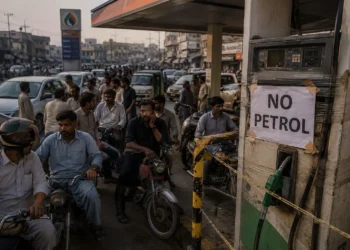
The majority of the oil that Pakistan produces is imported. Thus, the price of oil rises practically immediately when tensions increase close to the Strait of Hormuz. How does that affect us? Fuel starts to cost more. Bills for electricity rise Rising transport costs The cost of food rises Put simply, life suddenly gets more costly. Energy reliance is undoubtedly Pakistan’s greatest vulnerability.
In FY2025, Pakistan’s energy import bill came to $15.9 billion.A significant amount is derived from petroleum, LNG, and crude oil.Approximately 80% of oil imports cross the Strait of Hormuz.
Due to an interruption in supply, oil prices recently surpassed $108 per barrel.
Pakistan has already seen a 20% spike in petrol prices. According to experts, this issue might cause Pakistan’s import bill to increase by $8–9 billion.
My View
This is more than a “temporary shock.”This reveals a long-standing shortcoming: Pakistan never established energy security.
This trend is nothing new. The public bears the brunt of rising oil prices, not institutions or decision-makers. To be honest, Pakistan is still too weak to withstand these shocks.
Wars Can’t Be Handled by a Weak Economy
After years of instability, Pakistan was just now beginning to stabilize. Things were getting better, albeit slowly, and inflation was declining.
The scenario is now altered by the conflict.
•Increased oil prices imply:
•Higher imports
•Increased demand on foreign reserves
•Increased danger to the Pakistani rupee
Our economy’s basis is still weak, so even a minor worldwide disruption could lead it to tremble.
Inflation Reality
Before the war, inflation was finally slowing. But now:
Inflation already jumped to around 7–7.3%
In worst-case scenarios, it could rise toward 17% if oil supply is heavily disrupted
In short words:
Oil → Transport → Food → Everything
Pakistan’s inflation is highly fuel-driven, not demand-driven.
People think inflation is “coming back.”
Truth is—it never really left.
It was just temporarily controlled. This war is exposing how fragile that control was.
Stress on Foreign Reserves and the Trade Deficit
Pakistan’s import cost rises in direct proportion to rising oil prices, increasing the country’s trade deficit.
Imports increase by billions as oil prices approach $100 per barrel.
Pakistan already faces difficulties due to its small foreign exchange reserves.
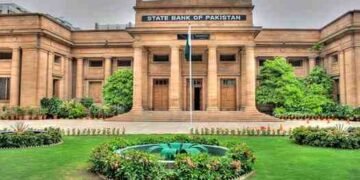
Despite the State Bank of Pakistan’s (SBP) assurances of increased stability and buffers, protracted conflict could: Empty reserves, Depend more on foreign or IMF loans, Apply pressure to the Pakistani rupee. Although it is still unstable, Pakistan’s economy is more stable now than it was in 2023. Everything can be swiftly destabilized by a single significant external shock, such as this war.
Hidden Opportunities Of War
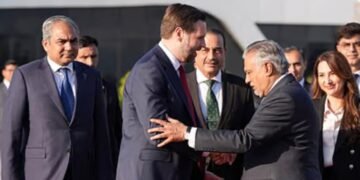
Opportunities exist despite the risks, Strategic Importance Pakistan’s geopolitical value is enhanced by its mediation role in the war. Potential for Regional Trade Pakistan can gain from trade links with Iran Energy pipelines if stability returns. Initiatives for regional connection push for Energy Reforms
Pakistan might be compelled by the crisis to make a renewable energy investment Decrease reliance on oil Restructure its power industry Personal Opinion Every crisis presents a chance, but only for nations prepared to take action. Pakistan frequently loses out on these opportunities as a result of poor policy implementation.
Author Opinion
Pakistan is not in danger, but it is also not disintegrating. Today’s economy is like a patient in recovery. The unexpected shock of the US-Iran war might either: Slow healing or send the nation back into fundamental flaws are the true issue, not only the conflict: excessive dependence on imports Poor energy planning and weak exports Every international crisis will repeatedly affect Pakistan in the same manner unless things are resolved.